In the village of Saviečiai, a new project, „Towards a Good Harvest,“ has been launched. Four companies – „Väderstad,“ „Syngenta,“ „Ivabaltė,“ and „Arvi Fertis“ – have joined forces to demonstrate the latest agricultural crop cultivation technologies to farmers in production fields, starting with soil cultivation, fertilisation technologies, and ending with crop protection.
Representatives of the companies involved in the project claim that the time has now come for a new approach to joint activities, saving farmers' valuable time by allowing them to see products offered by several companies in one place and learn about the latest technological solutions. Especially since the location is strategically very convenient – right in the middle of Lithuania.
„It’s hard to say now who first came up with the idea of working together. It’s great that we listened to one another. It was no coincidence that the four companies joined forces – the products and services we offer cover the entire technological chain. The result is a wonderful symbiosis: seeds, crop protection products, fertilisers, self-propelled machinery and tillage implements,“ says Oridijus Čaplikas, Head of the Baltic States at Syngenta Agro Services AG’s Lithuanian office.
While carrying out the project, participants promise to demonstrate not just common and tested technologies, but to seek out the very latest and boldest solutions, which farmers are not always willing to implement on their own farms. „Fertilisers will not be just nitrogen, phosphorus, and potassium; we will introduce all possible innovations. After all, we are not standing still; we are creating new products. We will strive to make it interesting for the farmer, for them to see something new, not just typical options. We will all grow together,“ promises Arvi Fertis Head of Agrochemical Issues, Virgilijus Paltanavičius.
According to Arvi Fertis„ marketing manager Tadas Jankauskas, they are not afraid of potential failures, as every mistake identified is an experience that allows them to take another step forward. “This is the first pancake, which is usually burnt – if that happens, we won't be scared. We already know what we'll do differently next year. We expect the project to be long-term,„ assures Romas Naudžiūnas, director of Väderstad.
The project kicked off this year with winter oilseed rape. „Before that, the field was growing spring wheat. Of course, it's not the most suitable preceding crop for winter oilseed rape, but we adapted to the situation and took a risk. Given the current weather conditions, the field looks good,“ summarises Odetа Šišlavienė, marketing specialist at Syngenta Agro Services AG's Lithuanian representative office, who was tasked with coordinating the progress of all the work.
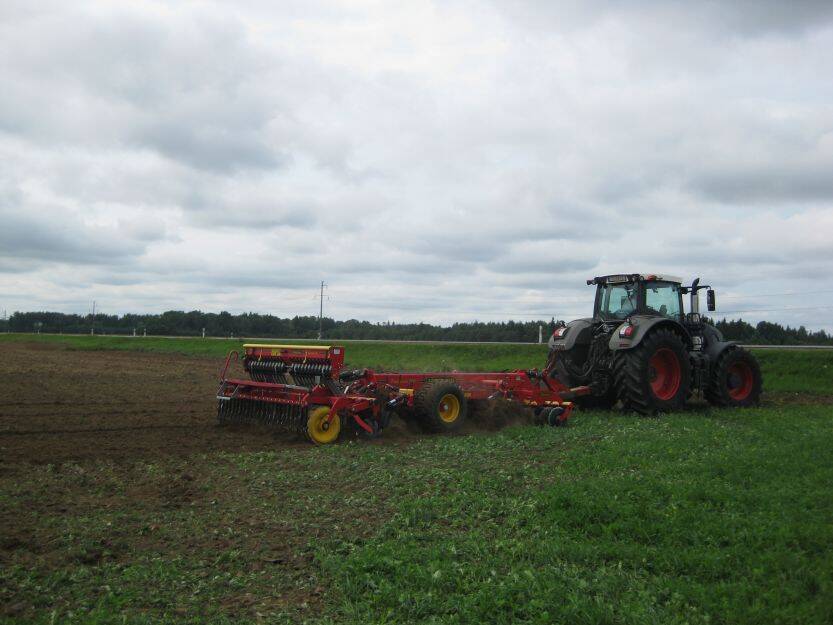
On August 22nd, oilseed rape was sown into three differently prepared fields. One area was worked with a Väderstad TopDown 300 universal cultivator to a depth of 20 cm. In the second field, the soil was ploughed with a Rabe Albatros to a depth of 25 cm. The third area was cultivated with a Väderstad Carrier X 425 disc cultivator, worked twice as shallow as the first field, at a depth of 10 cm. Both cultivators and the plough were aggregated with a Fendt 939 Vario tractor.
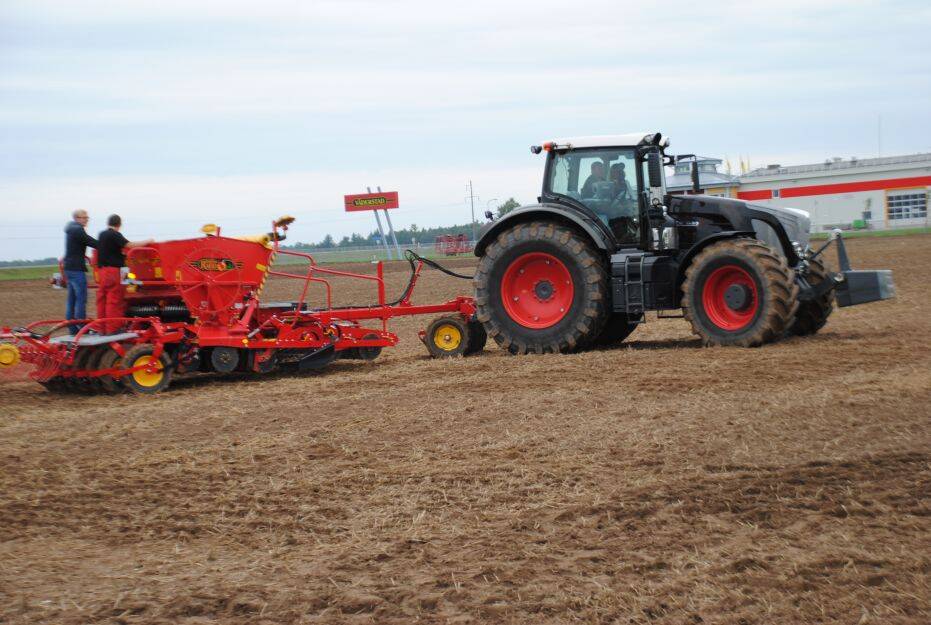
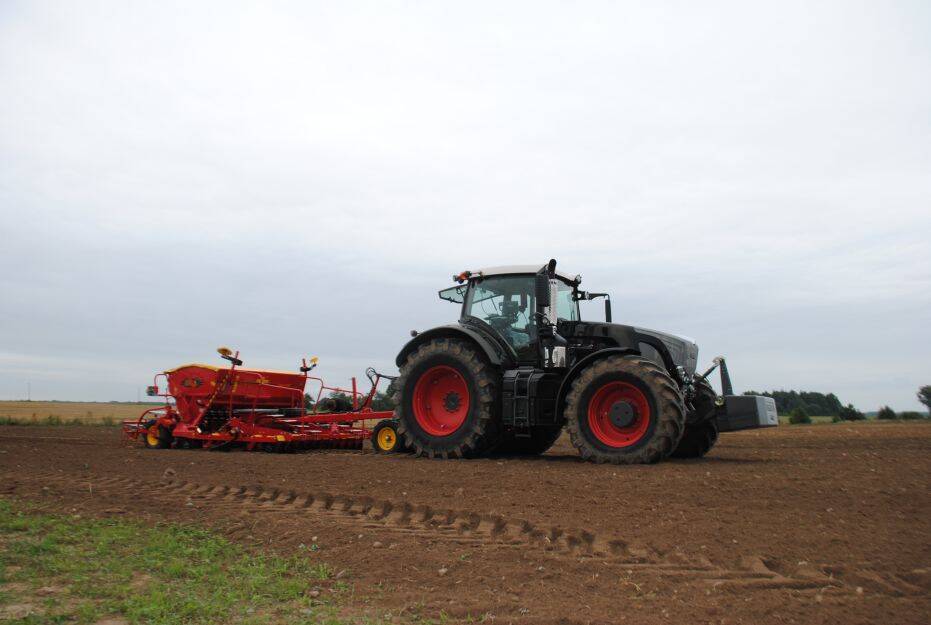
Five Syngenta winter oilseed rape varieties were chosen for sowing: Nelson, SY Kolumb, NK Technik, NK Petrol and Saveo. Sowing was carried out with a Väderstad Rapid 300C Super XL mechanical seed drill with localised fertiliser application. During sowing, Arvi Fertis NPK (B) 5-15-30 (+0.02) fertiliser was applied at a rate of 200 kg/ha and 240 kg/ha. In addition, nitrogen and phosphorus-fixing bacteria were sprayed to improve fertiliser uptake. To ensure economically viable fertilisation, UAB PRYMO conducted soil tests, which will allow for significantly more precise achievement of the set goals.
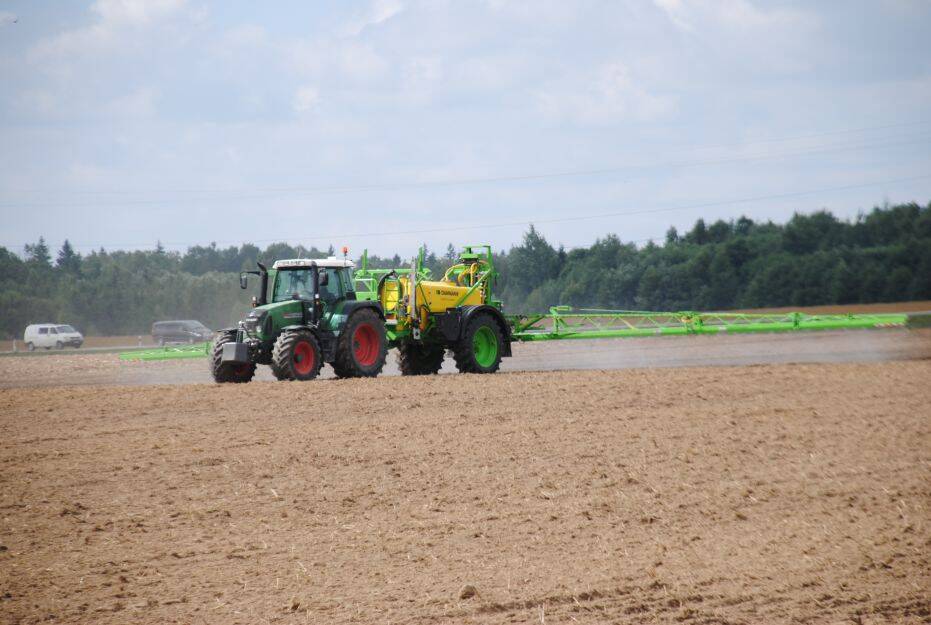
The crop was sprayed twice with herbicides. The day after sowing, a mixture of Brasan and Teridox (1+1 l/ha) was used, and then on September 6th, Agil was sprayed at 0.7 l/ha (to control volunteers). Spraying was carried out using a Dammann Land-Cruiser ANP 3024 sprayer, coupled with a Fendt 415 Vario tractor. A control (unsprayed) strip was left in each tillage variant to clearly assess the differences.
The first field day, to which all farmers in the country will be invited, is planned for this autumn, before the winter oilseed rape goes dormant: crop density and plant spacing will be assessed. In the spring, when plant vegetation begins, work will continue. A stand set up at the edge of the field will be continuously updated with precise information on crop maintenance work carried out, so farmers passing by can inquire about the progress of the trials at any time. In the spring, corn is planned to be sown in the area remaining next to the oilseed rape. Later, as the project continues, agricultural crops will be rotated according to crop rotation requirements. The project initiators emphasise that these are not scientific research but production trials focused on profitable cultivation. In other words, the main aim is a good and high-quality harvest.
„This project is unique in the Baltic countries, and likely even in Poland. Colleagues from Latvia and Estonia are already interested in when they can visit here, and are planning to bring their own delegations of farmers. We warmly welcome everyone,“ unanimously invite the representatives of the companies participating in the project.
My information